Deep tissue massage near you
Deep Tissue Massage in Salt Lake City
500+ Verified Google Reviews
From $125 $105 / 60 minTargets Chronic TensionLicensed SpecialistsSame-Day Often Available
Slow, firm pressure for chronic knots, tight shoulders and lower back pain. You set the depth.
677 S 200 W in downtown SLC. Open every day 10am to 10pm.
Pricing
Promotion: deep tissue at no extra charge.
Prices shown are card prices. Cash is $5 less.
Every therapist holds an active Utah massage therapy license. Ask for more or less pressure at any point. The session is yours to steer.
Gift cards available, a gift that actually helps someone feel better.
What Is Deep Tissue Massage?
Pressure that actually reaches the problem
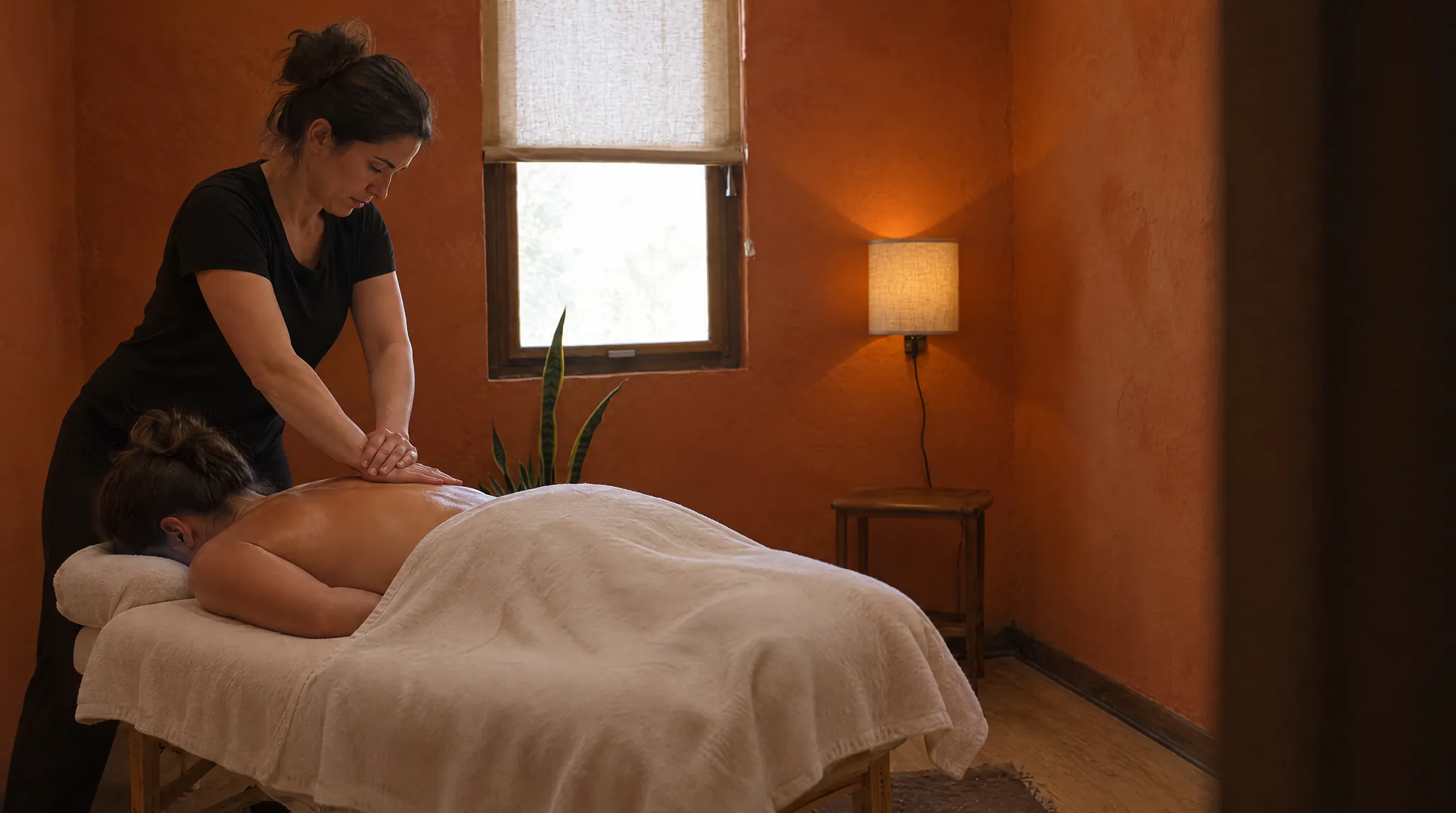
Deep tissue works through the superficial layer to reach the deeper muscle bellies, the myofascia, and the trigger points that refer pain across the body. Slow, sustained pressure applied with thumbs, knuckles, and forearms. The tension in your neck that's been there for two years. The knot in your shoulder that appeared during lockdown and never left. The lower back ache that follows you through every workday at the desk.
Fascia is the connective tissue web that wraps every muscle. Under chronic stress and poor posture, it thickens and adheres, creating the restrictions that gentle massage can't reach. Our Utah-licensed therapists look for where the tension starts, not only where it hurts.
Deep tissue or Swedish?
Swedish uses long, flowing strokes at light to medium pressure. It is the right choice for stress relief. Deep tissue uses slower strokes and sustained pressure to reach the deeper muscle layers and the fascia around them. It is the right tool for chronic pain and tension that gentler work has not touched.
Not sure which you need? Tell your therapist where it hurts and how much pressure you like. Our male therapists focus on deep tissue, sports and high-pressure work. Our female therapists are trained across all modalities. To request either, call (801) 288-1118. For the full comparison, read deep tissue vs Swedish massage.
Prefer broad pressure to thumbs and forearms? Ask about Ashiatsu massage. Your therapist holds overhead bars for balance and works with the flat of the foot.
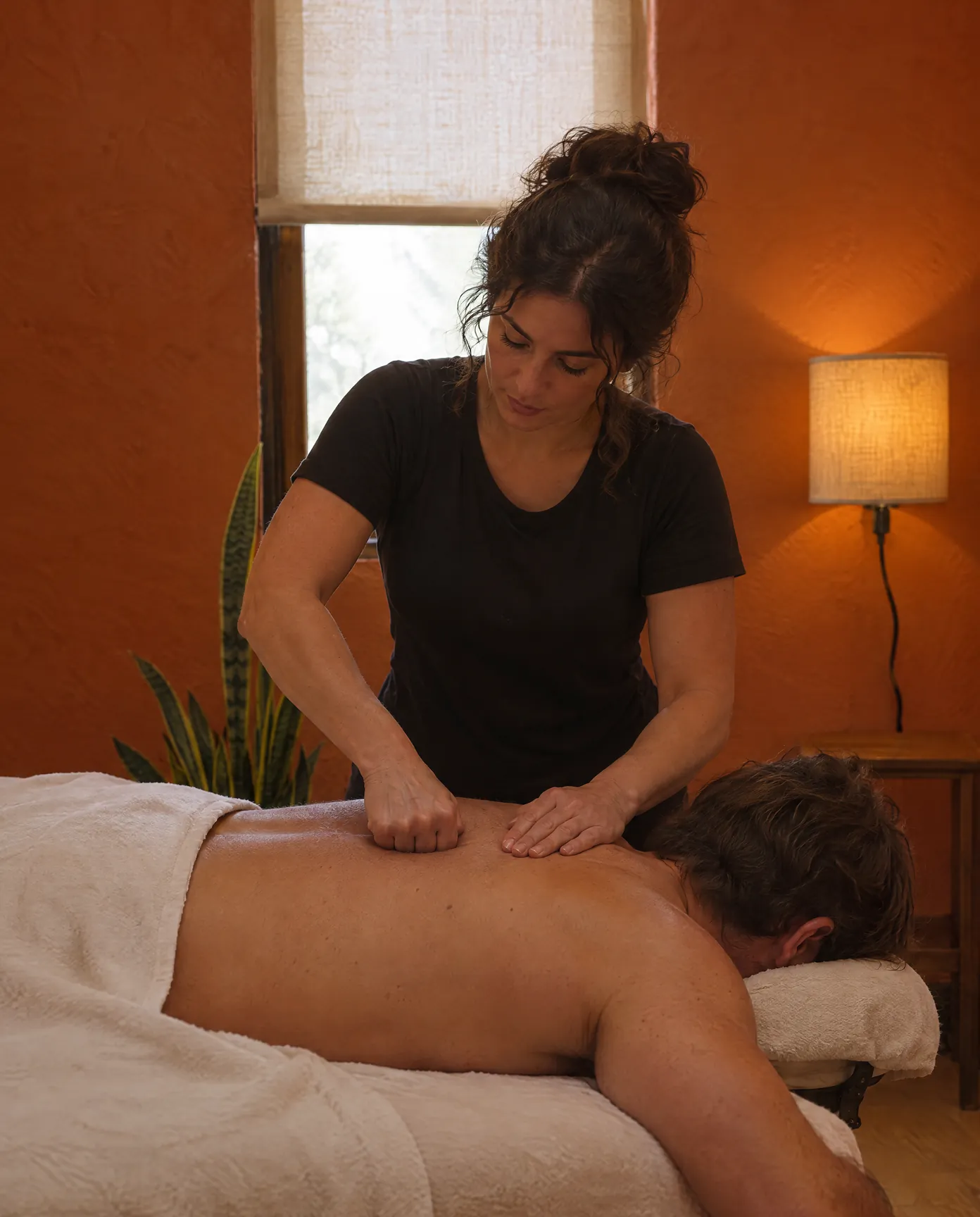
Three things deep tissue does well.
Chronic pain relief
Deep tissue massage reaches the deeper muscle layers and the fascia around them, where chronic tension tends to build.
Works on tight fascia
Tight fascia and old scar tissue can limit how you move. Slow, sustained pressure works these areas so they have a chance to loosen.
Postural relief
Long days at a desk pull the head forward and round the shoulders. Slow, targeted work eases that built-up pattern so you can sit and stand with less strain.
Keep Exploring
Other treatments worth knowing.
Swedish Massage
Long, rhythmic strokes for relaxation and stress relief. Ideal for maintenance, first-timers, or any day you need a full reset.
From $105
Sports Massage
Performance-focused bodywork designed around athletic demand. Train harder, recover faster, and stay injury-free longer.
From $105
Ashiatsu
Overhead bar work that allows broad, deep pressure using the therapist's foot, delivering a uniquely profound depth that hands cannot replicate.
From $105
Common Questions
Straight answers about deep tissue.
Will deep tissue massage hurt?
Deep tissue massage involves deliberate, sustained pressure into deeper muscle layers, and it is common to feel intensity, particularly in areas of chronic tension. This is distinct from sharp or alarming pain. Our therapists use the phrase "good hurt" to describe the productive discomfort of releasing long-held tissue. You are always in control: pressure is adjusted throughout the session based on your feedback, and no technique is pushed past your tolerance. Mild soreness 24–48 hours after the session is normal and signals that the tissue is responding. Staying well hydrated before and after helps significantly. If thumb and elbow work feels too sharp, ask about Ashiatsu barefoot massage. The therapist uses the whole foot, which spreads deep pressure over a wider area.
How is deep tissue different from Swedish massage?
Swedish massage uses broad, flowing strokes on superficial muscle layers to promote relaxation and circulation. Deep tissue massage uses slower, more targeted strokes and sustained pressure to reach the deeper layers of muscle and the connective tissue (fascia) surrounding them. Swedish is the right choice for stress relief and general wellbeing; deep tissue is the right tool when you have specific chronic pain, structural tension, scar tissue, or postural dysfunction that hasn't responded to gentler approaches. Many clients benefit from both, used strategically.
How many sessions do I need to see results?
Many clients notice meaningful improvement after a single session, particularly in acute tension areas. For chronic pain patterns that have developed over months or years, a series of four to six sessions is typically recommended, ideally spaced one to two weeks apart. This allows the tissue to integrate between sessions and enables your therapist to work progressively deeper as the musculature releases. Your therapist will assess your specific situation and give you an honest timeline at your first appointment.
What conditions does deep tissue massage help with?
Many clients come in for chronic neck and back tension, tension headaches, repetitive strain, tight IT bands, and the toll of long days at a desk: forward-head posture and rounded shoulders. For a diagnosed condition or injury, check with your doctor first. When in doubt, ask your therapist, we'll tell you honestly whether deep tissue is appropriate for your situation.
Should I eat before a deep tissue massage?
Avoid a heavy meal within 60–90 minutes of your session. Deep tissue work can involve moderate pressure on the abdomen, and a full stomach makes this uncomfortable. A light snack two hours before is fine. Hydration matters more than food, so drink plenty of water the day before and the day of your session, and keep hydrating well afterward.
Stop living around the pain.
Same-day appointments most days. An experienced SLC studio for deep therapeutic work, open 10am to 10pm.